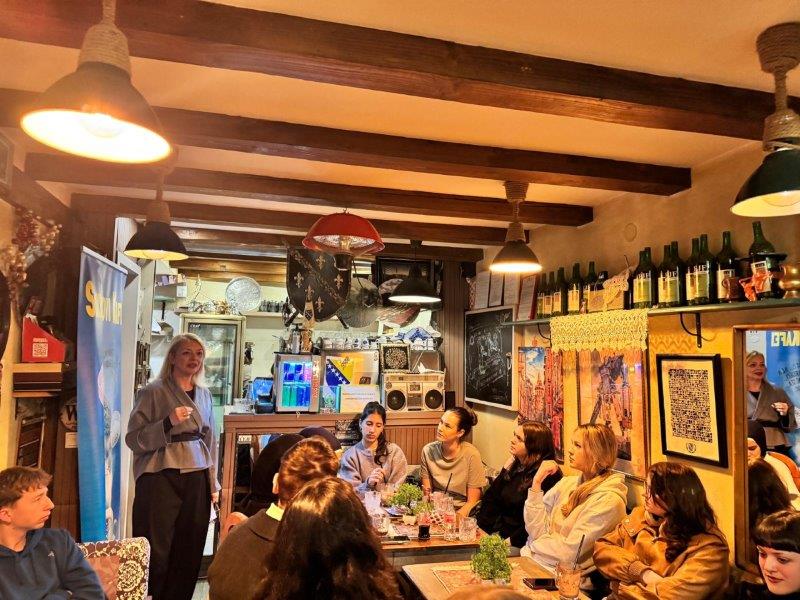
Can we be authentic in a world that constantly demands that we play certain roles? And has authenticity itself become just another trend marketed to us through social media and other media platforms? These questions were explored at the second Socratic Café in Sarajevo, facilitated by Dr. Elmana Cerić. The central theme of the gathering was: “What does it mean to be authentic in a world that constantly requires us to play certain roles—or is authenticity itself just another role we perform?”
The conversation began with a seemingly simple question: What does it actually mean to be authentic? For some participants, authenticity meant the freedom to do what we want; for others, it meant being honest with ourselves, while some associated it with the process of shaping and presenting one’s identity. But how many of our choices are truly our own, and to what extent are they shaped by the expectations of society, family, culture, and the media?
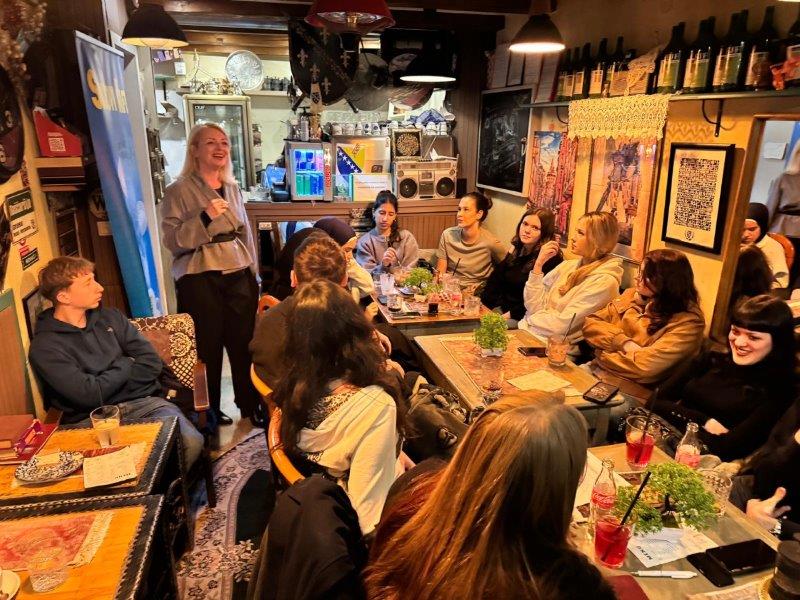
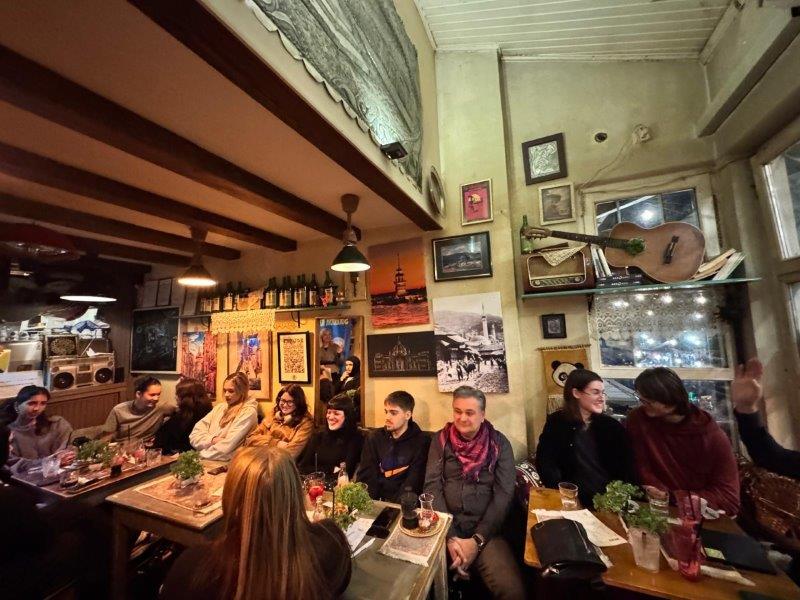
Particular attention was given to the paradox of contemporary society, in which authenticity is increasingly presented as an imperative. Social media encourages us to be ourselves, to be different and unique, while simultaneously offering predefined models of authenticity through products, lifestyles, and trends. If we are all trying to be authentic by following the same patterns, are we truly authentic?
The discussion also raised the question of whether authenticity necessarily implies nonconformity and resistance to social norms. Must an authentic person reject dominant trends, or does authenticity instead lie in the ability to consciously decide which trends to engage with and which to distance ourselves from? In this sense, authenticity does not necessarily mean rejecting society, but rather critically reflecting on our place within it.
The conversation also explored the moral dimension of authenticity. Can we be authentic if we follow moral rules that we have not chosen ourselves? Are our values an expression of free choice, or are they the result of upbringing, social norms, and expectations? And can authenticity simply mean being true to ourselves when our choices have consequences for other people?
One particularly challenging question was whether authenticity is a privilege. Economic and existential security undoubtedly provide greater freedom of choice, including the possibility of rejecting certain social roles without facing serious consequences. On the other hand, participants questioned the assumption that material security is a necessary precondition for authenticity, arguing that authenticity may emerge from our inner relationship with ourselves, our values, and our life choices.
Perhaps authenticity is not about always being different from others, but about understanding why we make the choices we make. And perhaps the first step toward authenticity is precisely the willingness to question what we consider to be our own free choices.