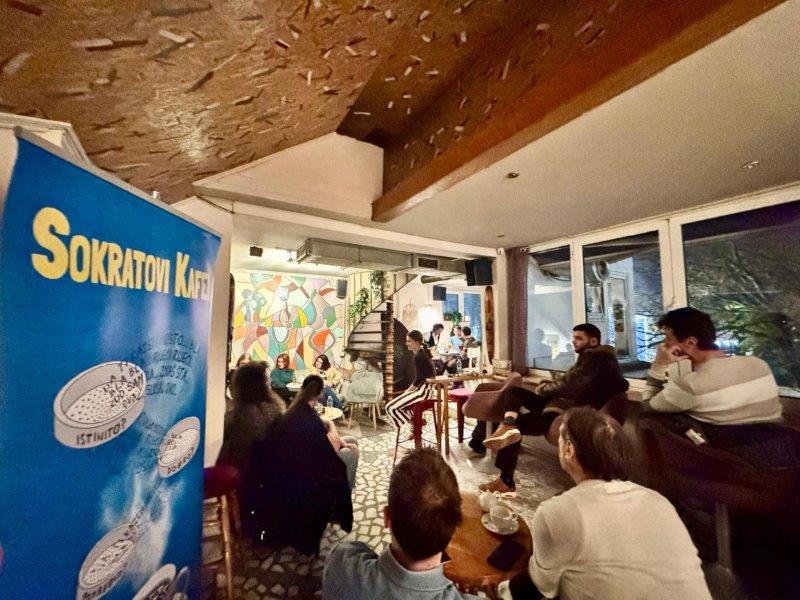
Can we truly speak of freedom of choice when our needs, desires, and life decisions are shaped by the economic system in which we live? This question was at the heart of the final Socratic Café of 2026, held on November 12 in Banja Luka. The discussion, titled “Capitalism: Does It Liberate Us or Make Us Slaves to Our Own Needs?”, was moderated by Anabela Zrnić and coordinated on behalf of the TPO Foundation by Hannah Kaunitz.
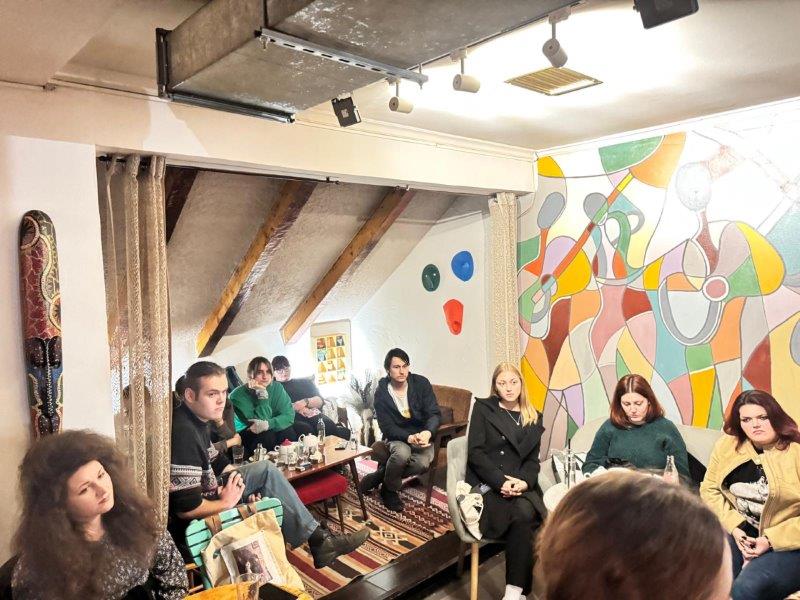
The conversation began by examining capitalism as an economic system that, despite its many contradictions, has contributed to a significant rise in living standards and material prosperity. However, participants questioned whether economic progress necessarily translates into greater individual freedom.
Where do our genuine needs end, and where do desires shaped by the market, advertising, and social expectations begin? How much of what we consider essential to a good quality of life actually stems from consumer habits and the desire for social recognition? Particular attention was given to who shapes our needs and how our ability—or inability—to satisfy them affects our social status, sense of belonging, and personal dignity.
The discussion then broadened to explore the relationship between capitalism, work, and education. Participants reflected on the extent to which the economic system determines not only what we buy and consume but also what we study, which professions we pursue, how much we work, and what kind of future we can envision. Another important question emerged: How free can individuals truly be when their economic security depends on constant productivity and market competition?
A significant part of the conversation focused on social justice, access to healthcare and education, and the respective responsibilities of the state and individuals. Does capitalism provide equal opportunities for everyone, or does it further deepen existing social inequalities? How much work should be necessary to secure a dignified, safe, and independent life? And where does individual responsibility end and the responsibility of the broader social and economic system begin?
Towards the end of the discussion, participants addressed perhaps the most important philosophical question of the evening: Can capitalism be not only economically efficient but also ethically good? Can a system driven by competition and continuous growth simultaneously foster solidarity, justice, and care for those who do not enjoy equal opportunities?
Once again, the Socratic Café demonstrated the importance of creating spaces where complex social issues can be discussed openly, critically, and thoughtfully, without the pressure to arrive at definitive answers. Rather than dividing participants into supporters and critics of capitalism, the conversation encouraged a critical re-examination of personal beliefs, everyday choices, and the social structures that shape our lives.