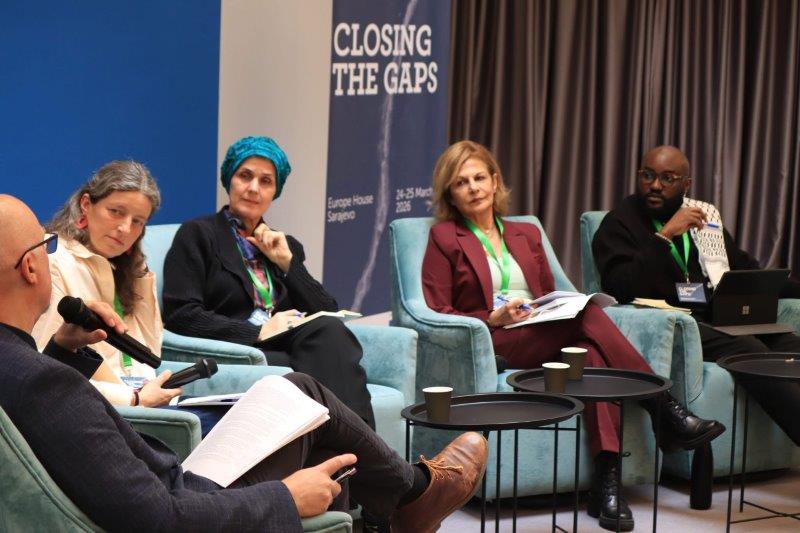
TPO Foundation took part in an important international session dedicated to examining the shortcomings of contemporary memory policies and practices, contributing to a broader dialogue on social justice, inclusion, and peacebuilding. The Workshop “Critical Dialogue on Memory Policies and Social Justice” was organized by War Childhood Museum from Sarajevo and International Coalition of Sites of Conscience.
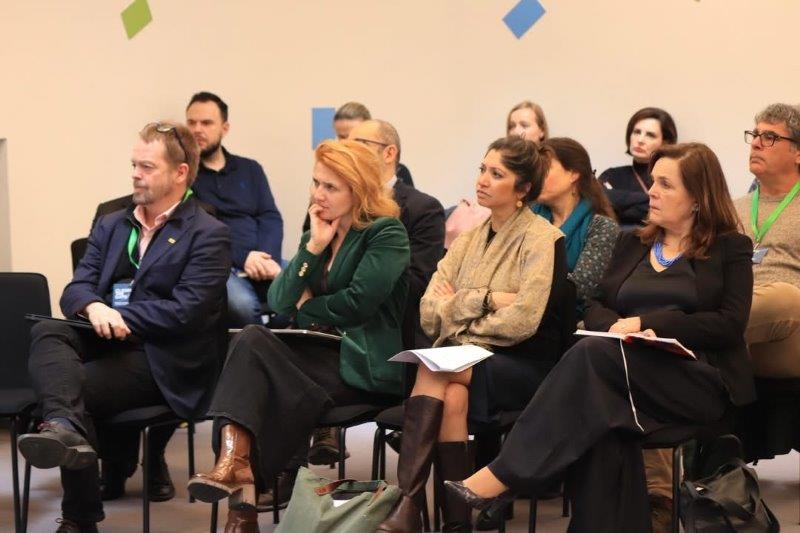
TPO Foundation took part in an important international session dedicated to examining the shortcomings of contemporary memory policies and practices, contributing to a broader dialogue on social justice, inclusion, and peacebuilding. The session brought together experts from across Europe to critically reflect on key gaps in current approaches to memory. Discussions highlighted the risks of reinforcing dominant narratives while sidelining marginalized histories, as well as the growing fragmentation caused by identity-based approaches that produce competing and compartmentalized narratives. Participants also emphasized the weak connection between memory work and present-day efforts to combat discrimination and prevent violence.
Moderated by Refik Hodžić, a strategic communications and transitional justice specialist, the session aimed to foster a shared understanding of where existing memory policies fall short, setting the stage for developing more inclusive and impactful approaches in the future.
Among the speakers was Emmanuel Achiri from the European Network Against Racism (ENAR), who problematized the limitations of European memory policies in accommodating multiple perspectives and questioned why remembrance so often fails to translate into concrete action against contemporary injustices.
Dr. Marije Hristova of the Spanish National Research Council (CSIC) reflected on the Spanish context, analyzing the impact of the Historical Memory Law and the Democratic Memory Law. She explored whether these state-led initiatives have successfully prevented historical revisionism or whether they have, in some cases, reinforced societal divisions and limited public engagement with ongoing injustices.
A significant contribution came from Prof. Dr. Zilka Spahić-Šiljak, Academic Director of the Feminism and Religion (FER) School at TPO Foundation and the University of Sarajevo. Drawing on feminist and faith-sensitive perspectives, she highlighted how existing memory policies often reinforce male-centered national narratives while marginalizing or instrumentalizing women’s experiences. She emphasized the social and political consequences of such exclusions and called for more inclusive approaches that recognize diverse memories and lived experiences.
Professor Spahić-Šiljak also underscored the transformative potential of feminist and faith-based approaches in challenging exclusionary narratives and fostering forms of remembrance that contribute to social cohesion and sustainable peace.
Through its engagement in this session, TPO Foundation reaffirmed its commitment to promoting critical, inclusive, and justice-oriented approaches to memory, bridging the gap between remembrance and action, and supporting dialogue that addresses both past injustices and present-day challenges.